Category: Focus

  • The Moral Clarity of Richard Falk

    The Moral Clarity of Richard Falk

    The moral clarity of
    Richard Falk

    Rod Such 

    The Electronic Intifada 

    14 November
    2014


     “The Palestinian struggle for
    self-determination has become the great international moral issue of our time,”
    the international law expert Richard
    Falk
     declares in his latest book, Palestine: The
    Legitimacy of Hope
     (Just World Books).

    Falk calls it “the last major anticolonial struggle.”

    In this wide-ranging book, the
    professor emeritus of international law at Princeton University embraces the boycott,
    divestment and sanctions
     (BDS) movement, advocates abandoning
    the two-state solution and argues that the
    best way of understanding Israel is as a settler-colonial state.

    He notes that the importance of BDS lies in the fact that it is
    Palestinian-led and that Israel has “no intention of allowing a viable
    Palestinian state to be established.”

  • Text of Amnesty International report on Gaza

    Text of Amnesty International report on Gaza

    http://www.amnesty.org/en/library/asset/MDE15/032/2014/en/613926df-68c4-47bb-b587-00975f014e4b/mde150322014en.pdf

  • Why I Helped Pay for Trimet Bus Ads Critical of Israel

    Why I Helped Pay for Trimet Bus Ads Critical of Israel

    By Rod Such

    Ads began appearing on Portland buses last week that read, “Israel’s War Crimes, Your Tax Dollars at Work.” The ads show a photo of a Palestinian woman sitting in the rubble of her bombed-out Gaza home. I helped pay for this ad, and I want Portland residents to know why.

    Almost 44 years ago to the day, fresh out of college and just starting a career as a journalist, a friend and I watched CBS correspondent Mike Wallace interview Private Paul Meadlo on “60 Minutes.” Meadlo participated in the massacre of Vietnamese men, women and children in My Lai village during the Vietnam War. Wallace asked Meadlo if his combat unit killed babies. The transcript reads, “Q. And babies?” Meadlo answered, “And babies.”

    After the interview, my friend David commented, “If we don’t do something to end this war, we’ll be just like the ‘good Germans’ who pretended they knew nothing about the Holocaust.” His remark resonated with me, and I resolved to get involved in the antiwar movement. Weeks went by, however, and I did nothing. Then one morning, on my way to work, I saw a billboard ad, a photograph of the bodies of the My Lai villagers — men, women and infants — heaped in a pile with the words: “Q. And babies? A. And babies.”

    I knew then that I was not going to be able to escape this daily reminder that my own government was committing war crimes. I was not going to be able to go about my day-to-day business without confronting this awful fact. That ad changed my life in a way because I soon quit my job and went to work full-time for the antiwar movement.

  • Goliath: Life and Loathing in Greater Israel

    Goliath: Life and Loathing in Greater Israel

    On October 1st, New York Times bestselling author and journalist Max Blumenthal released his latest book, Goliath: Life and Loathing in Greater Israel. To purchase the book, click here.

    Goliath, according to Adam Hochschild, is “brash, gritty,
    personal and close to the ground…a report from an Israel and a
    Palestine we seldom see in the mainstream media.” Blumenthal takes us on
    a journey through the badlands and high roads of Israel-Palestine,
    painting a startling portrait of Israeli society under the siege of
    increasingly authoritarian politics as the occupation of the
    Palestinians deepens. The book is already receiving significant
    attention and has been positively reviewed by Kirkus Reviews:
    “A rich, roiling examination of ‘the State of Israel during a period of
    deepening political and societal crisis’ … Blumenthal is an
    enterprising reporter.” 

    In an article for Al-Monitor, Akiva Eldar — a former chief political columnist and editorial writer for the Israeli newspaper Haaretz, where he worked for 35 years — writes,

    Unlike most Jews — American or Israeli — Blumenthal chose to leave
    his comfort zone, go into disputed territory and examine the burning
    questions for himself. In fact, Blumenthal’s greatest strength and
    interest is in events on the ground and the people who live there, far
    from the ‘peace process’ and diplomatic salons. 

    (more…)

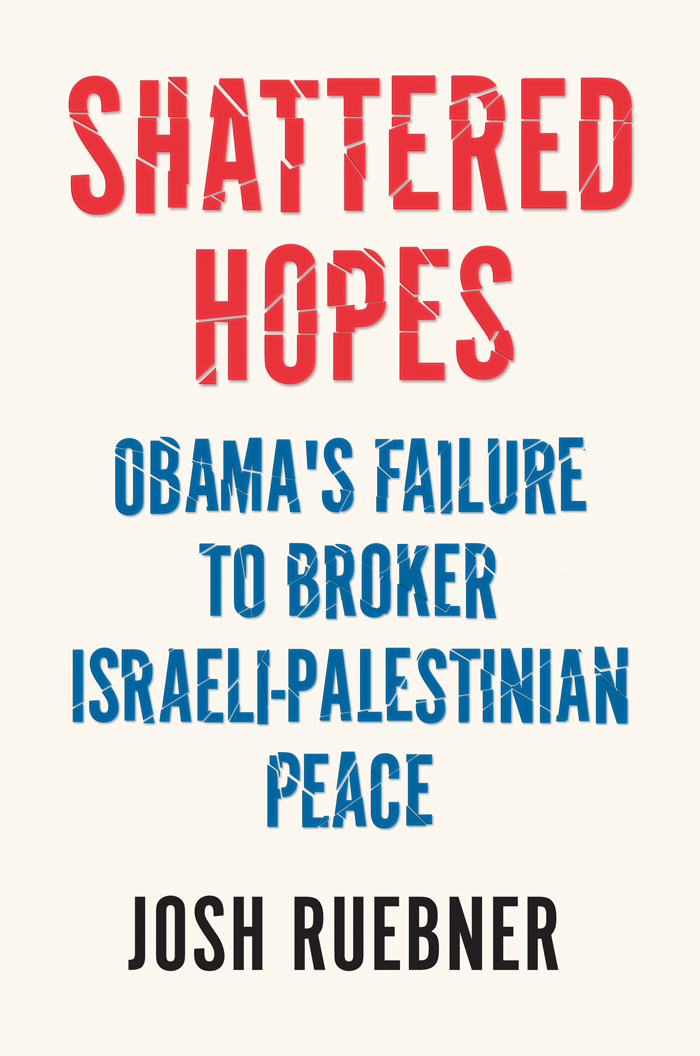
  • Shattered Hopes: Obama’s Failure to Broker Israeli-Palestinian Peace

    Shattered Hopes: Obama’s Failure to Broker Israeli-Palestinian Peace

    Hard-hitting critique of the Obama administration’s failure in the Middle East, by a leading DC-based advocate
    President Barack Obama’s first trip abroad
    in his second term took him to Israel and the Palestinian West Bank,
    where he despondently admitted to those waiting for words of
    encouragement, “It is a hard slog to work through all of these issues.”
    Contrast this gloomy assessment with Obama’s optimism on the second day
    of his first term, when he appointed former Senate Majority Leader
    George Mitchell as his special envoy for Middle East peace, boldly
    asserting that his administration would “actively and aggressively seek a
    lasting peace between Israel and the Palestinians.” How is it that
    Obama’s active and aggressive search for progress has become mired in
    the status quo? Writer and political analyst Josh Ruebner charts Obama’s
    journey from optimism to frustration in the first hard-hitting
    investigation into why the president failed to make any progress on this
    critical issue, and how his unwillingness to challenge the Israel lobby
    has shattered hopes for peace.

    Written in a clear and
    accessible style by the advocacy director of a national peace
    organization and former Middle East analyst for the Congressional
    Research Service, Shattered Hopes offers an informed history of
    the Obama administration’s policies and maps out a true path forward
    for the United States to help achieve Israeli-Palestinian peace.

  • Israeli columnist calls for Boycott, Divestment, Sanctions

    Israeli columnist calls for Boycott, Divestment, Sanctions

    Anyone who really fears for the future of the country needs to be in favor at this point of boycotting it economically.

    A contradiction in terms? We have considered the alternatives. A boycott is the least of all evils, and it could produce historic benefits. It is the least violent of the options and the one least likely to result in bloodshed. It would be painful like the others, but the others would be worse.

    On the assumption that the current status quo cannot continue forever, it is the most reasonable option to convince Israel to change. Its effectiveness has already been proven. More and more Israelis have become concerned recently about the threat of the boycott. When Justice Minister Tzipi Livni warns about it spreading and calls as a result for the diplomatic deadlock to be broken, she provides proof of the need for a boycott. She and others are therefore joining the boycott, divestment and sanction movement. Welcome to the club.

    The change won’t come from within. That has been clear for a long time. As long as Israelis don’t pay a price for the occupation, or at least don’t make the connection between cause and effect, they have no incentive to bring it to an end. And why should the average resident of Tel Aviv be bothered by what is happening in the West Bank city of Jenin or Rafah in the Gaza Strip? Those places are far away and not particularly interesting. As long as the arrogance and self-victimization continue among the Chosen People, the most chosen in the world, always the only victim, the world’s explicit stance won’t change a thing.

    (more…)

  • Full Text of UN Committee on the Rights of the Child detailing Israeli torture of Palestinian children

    Full Text of UN Committee on the Rights of the Child detailing Israeli torture of Palestinian children

    The United Nations Committee on the Rights of the Child issued the following report on June 14, 2013, detailing Israeli human rights abuses of Palestinian children, including torture. The full text of the report can be found at this link:

    http://www2.ohchr.org/english/bodies/crc/docs/co/CRC-C-ISR-CO-2-4.pdf

  • Sabra Hummus: A Great Focus for the BDS Movement in the Pacific Northwest

    Sabra Hummus: A Great Focus for the BDS Movement in the Pacific Northwest

    (Links to Sabra BDS Tools at the end of this document)

    Sabra foods is a joint venture of PepsiCo. Inc. and Israel’s Strauss Group Ltd—the second largest food and beverage company in Israel. Everything about this company cries out for a boycott of its major US product—Sabra Hummus.

    Hummus is big business. According to the Wall Street Journal article (http://online.wsj.com/article/SB10001424127887323798104578453174022015956.html) “Sabra doesn’t disclose financial data, but IRI data show its hummus sales were about $315 million last year, up about 18%. And because some retailers, including Costco Wholesale Corp. (COST), don’t provide information to IRI, the figures understate Sabra’s retail sales.”
    I hope everyone who is concerned about the plight of Palestine will take local action to educate purveyors and customers about this company. It is an excellent opportunity to spread the word about the real issues in the Palestine/Israel conflict while at the same time helping Northwest farmers by promoting sustainability and supporting the “buy local” trend. The tools included here provide a simple way to help with the Boycott movement.
    Those who already support the global BDS movement know the moral issues that are at stake.  The revenue stream produced by Sabra hummus delivers million of tax dollars to Israel’s current Likud government. That government uses that money to implement their belligerent occupation of Palestinian land, their illegal separation wall, and their continued settlement of Palestinian land.  Those tax dollars also helps Israel defy the international laws that require Palestinian refugees to be allowed to return to their legal homes in Israel and the West Bank. I don’t believe most Americans would willingly support these policies if they were more aware of what is at stake. Simply put, when you buy Sabra hummus you are supporting war and oppression.

    Direct support for Israeli aggression: In their posting on their own Sabra hummus boycott, The Denver University Students for Justice in Palestine say that:

    Sabra Hummus is owned in part by the Strauss Group, which adopts members of the Golani and Givati Brigades of the Israeli military, and subsidizes their living costs, among other things, paying expenses in the 5 and 6 figures. These brigades are responsible for some of the most egregious human rights violations of the Israeli occupation of Palestine, such as the bombings of Gaza in 2008-9 in Operation Cast Lead, and the imprisonment of children in Israeli dungeons.”

    Sensitivity: The name Sabra itself is offensive and contentious. Sabra was the name of one of the Palestinian refugee camps where massacres of Palestinian refugees took place under the watchful eye of the Israeli Defenses Force (the descendants of the “Jewish resistance”). All together, as many as 3,500 Palestinians died at the Sabra and Shatila camp massacre. To name an Arabic snack food after these kinds of acts is truly offensive and distasteful.
    The term “Sabra”  also refers to the earliest Israelis born in Israel.  To quote from the Wikipedia entry:  
    The term was used by the Zionist movement, to celebrate the “New Jew” that emerged in Israel…Unlike the “Old Jew” who did not fight for his self-defense, the Sabra fought in the Jewish resistance movements, in the Palmach and after the establishment of Israel in the Israel Defense Forces.

    In other words, the term celebrates the militarization of the very concept of what it means to be Jewish: it celebrates a shift from the tolerant, humanistic ideas which characterized a certain phase of  Jewish development into the violent, intolerant, aggressive phenomenon of modern, hard-line Zionism epitomized by the current Likud government of Israel. What Wikipedia mildly terms the “Jewish resistance movements” –groups like the Palmach, Irgun, and the Stern Gang were “resisting” the British who had made Jewish settlers in Palestine a privileged group at the expense of the original native Palestinians (Muslim, Christian and Jewish). The “Jewish resistance” orchestrated a campaign of terror that included the infamous bombing of the King David Hotel and  the assassinations of the British High Commissioner and  the UN’s first official peace negotiator Swedish Count Folke Bernadotte. These same “Jewish resistance movements” were deeply implicated in the ethnic cleansing that Israel launched in 1947, a process which involved massacres like that at Dar Yassin.  This dark chapter in history is nothing to celebrate.

    Jobs: The corporate polices of Sabra have  serious local implications for people in the Pacific Northwest as well.  The Pacific Northwest is a major producer of the chickpeas that are the main ingredient in Hummus.  Sabra is investing heavily to promote cheap southern grown alternatives to chickpeas grown in the Northwest. That will reduce their transportation costs to their eastern production points, but since chickpeas are vulnerable to a number of diseases in warmer climates, it is safe to assume that these southern grown chickpeas will be more highly dosed with pesticides, fungicides, etc. than the local product grown in the Pacific Northwest. In other words, Sabra’s business strategy is threatening the livelihoods of farmers in the Pacific Northwest, and creating jobs in the east which could be easily done here at home, while helping to create a product that is  probably not that healthy.

    Business practices: Both of the two companies which merged and later created the present day Sabra (Strauss and Elite) date back to the days of the British Mandate in Israel in the 1930’s.  Both have been fined for their unsavory business practices.  According to Wikipedia, between 2004 and 2006, both Strauss and Elite were listed as monopolies by the Israel Antitrust Authority.  Interestingly, “Strauss-Elite has been found to charge more for their products in Israel than for the same products exported to other countries.”  If they can’t even be fair to their own people, why should you support them?


    Health and Quality:
    Everyone respects quality and value in consumer goods. Food is an especially sensitive product. Not only does it affect our health, we typically use food in celebrations of our most important values.  Can you really feel good about offering a “Sabra” dip at a party when you know it is tainted with an illegal occupation and apartheid? Can you really feel good about idly snacking on this dip while you watch the evening news and seeing the consequences of Israel’s policy in the Middle East?  From the moment you taste this product, you can feel the overdose of salt and sugar that is used to give it that addictive quality peculiar to processed fast food.  There is that unmistakable hint of “miracle whip” about it. It is visibly excreted from an extruder! Just two tablespoons is one ‘serving.”  Each serving contains 5% of your daily salt requirement. A typical person will easily eat at least 4 servings at a sitting—if not more.  A glance at the shelf life will give you an idea about how highly preserved it is. Yuck!

    Authenticity: Trying exotic foreign foods is one way that people first begin to learn about other cultures and countries. Contrary to what you might assume from the name and source of this product, it is not traditional Jewish food at all. As the Wikipedia entry notes, “As a result of its popularity, Israelis have made hummus a “national food symbol … Commenting on its popularity, Gil Hovav, an Israeli food editor interviewed on the BBC program Cooking in the Danger Zone, stated that “even during the intifada years Jews would sneak […] into the Muslim quarter just to have a vital, really genuine good hummus,” and noted that like many dishes considered to be Israeli national foods, hummus is actually Arab.”

    So if you like hummus, why eat the Israeli version when even Israelis prefer the real (Arab) thing? Good local hummus is probably available in every middle eastern restaurant you can find—and it is easy and cost effective to make real hummus at home at a fraction of the cost of the Sabra product.

    Overall, then, sales of Sabra hummus contribute both financially and symbolically to an Israeli state policy of aggression and expansion at the expense of the Palestinian people. Sabra’s corporate policy undermines the livelihoods of farmers in the Pacific Northwest and ,by undercutting sales of locally produced hummus, threatens jobs in the Pacific Northwest. Its bad business practices show that, all politics aside,  it is not a company that deserves our support.

    Thankfully, local consumers and hummus lovers have some readily available alternatives for taking action on this issue. Those are presented in the action packet attached here, which includes:

    The overall objective of all this is to create a friendly situation where you can help  educate more people about Middle Eastern culture and politics—especially the issues of Palestine— in a friendly, non-threatening way that promotes dialogue and understanding. You don’t have to be an “expert” on the Middle East—you just need to have some simple constructive facts at your command.

    You can begin with the pamphlet we have attached (14 Myths about Palestine/ Israel). This is by no means an exhaustive list of the myths surrounding this issue but it is accurate and answers some of the most basic questions. Phyllis Bennis’ concise book Understanding the Palestinian-Israeli Conflict: A Primer is also a good (and far more comprehensive) starting point.

    Justice for Palestinians is long overdue. As Secretary of State Kerry tries to restart official negotiations on this issue, we will have some good opportunities to bring this long neglected issue to the fore. We need to more creative and  more pro-active in taking advantage of the publicity that will surround these efforts. In particular, we need to bring the Boycott, Divestment and Sanctions (BDS) movement to the attention of our neighbors. I hope this packet will help people do that. Although I wasn’t aware of it when I began drafting these materials, others are already working along the same lines. (http://mondoweiss.net/2013/02/settlement-products-hummus.html, http://denversjp.wix.com/dusjp#!sabra/c1qb0)

    I also hope people start exploring other options. Many of us who understand this issue are older and have investments—why don’t we all simply pick up the phone and call local brokers and retirement fund managers. If we express our concerns, tell them we are personally ready to divest ourselves from companies involved in business with Israel, and ask them to look for “Israel free” investment options for our retirement funds, the word will quickly get around…institutions have nerve endings too.

    All the best to all of you,
    Gilbert Schramm

  • Can Israel be Jewish and democratic?

    Can Israel be Jewish and democratic?


    MARCH 9, 2013, 7:30 PM

    On Questioning the Jewish State


    By JOSEPH LEVINE

    I was raised in a religious Jewish environment, and though we were not strongly Zionist, I always took it to be self-evident that “Israel has a right to exist.” Now anyone who has debated the Israeli-Palestinian conflict will have encountered this phrase often. Defenders of Israeli policies routinely accuse Israel’s critics of denying her right to exist, while the critics (outside of a small group on the left, where I now find myself) bend over backward to insist that, despite their criticisms, of course they affirm it. The general mainstream consensus seems to be that to deny Israel’s right to exist is a clear indication of anti-Semitism (a charge Jews like myself are not immune to), and therefore not an option for people of conscience.

    Over the years I came to question this consensus and to see that the general fealty to it has seriously constrained open debate on the issue, one of vital importance not just to the people directly involved — Israelis and Palestinians — but to the conduct of our own foreign policy and, more important, to the safety of the world at large. My view is that one really ought to question Israel’s right to exist and that doing so does not manifest anti-Semitism. The first step in questioning the principle, however, is to figure out what it means.

    One problem with talking about this question calmly and rationally is that the phrase “right to exist” sounds awfully close to “right to life,” so denying Israel its right to exist sounds awfully close to permitting the extermination of its people. In light of the history of Jewish persecution, and the fact that Israel was created immediately after and largely as a consequence of the Holocaust, it isn’t surprising that the phrase “Israel’s right to exist” should have this emotional impact. But as even those who insist on the principle will admit, they aren’t claiming merely the impermissibility of exterminating Israelis. So what is this “right” that many uphold as so basic that to question it reflects anti-Semitism and yet is one that I claim ought to be questioned?

    (more…)

  • Judith Butler’s talk on BDS at Brooklyn College

    Judith Butler’s talk on BDS at Brooklyn College

    Judith Butler’s Remarks to Brooklyn College on BDS

    Judith Butler | February 7, 2013

    [Editors Note: Despite a campaign to silence them, philosophers Judith Butler and Omar Barghouti spoke at Brooklyn College on Thursday night. In an exclusive, The Nation presents the text of Butler’s remarks.]

    Usually one starts by saying that one is glad to be here, but I cannot say that it has been a pleasure anticipating this event. What a Megillah! I am, of course, glad that the event was not cancelled, and I understand that it took a great deal of courage and a steadfast embrace of principle for this event to happen at all. I would like personally to thank all those who took this opportunity to reaffirm the fundamental principles of academic freedom, including the following organizations: the Modern Language Association, the National Lawyers Guild, the New York ACLU, the American Association of University Professors, the Professional Staff Congress (the union for faculty and staff in the CUNY system), the New York Times editorial team, the offices of Mayor Michael Bloomberg, Governor Andrew Cuomo and Brooklyn College President Karen Gould whose principled stand on academic freedom has been exemplary.

    The principle of academic freedom is designed to make sure that powers outside the university, including government and corporations, are not able to control the curriculum or intervene in extra-mural speech. It not only bars such interventions, but it also protects those platforms in which we might be able to reflect together on the most difficult problems. You can judge for yourself whether or not my reasons for lending my support to this movement are good ones.   That is, after all, what academic debate is about. It is also what democratic debate is about, which suggests that open debate about difficult topics functions as a meeting point between democracy and the academy. Instead of asking right away whether we are for or against this movement, perhaps we can pause just long enough to find out what exactly this is, the Boycott, Divestment and Sanctions movement, and why it is so difficult to speak about this.

    I am not asking anyone to join a movement this evening. I am not even a leader of this movement or part of any of its governing committee, even though the New York Times tried to anoint me the other day—I appreciated their subsequent retraction, and I apologize to my Palestinian colleagues for their error. The movement, in fact, has been organized and led by Palestinians seeking rights of political self-determination, including Omar Barghouti, who was invited first by the Students for Justice in Palestine, after which I was invited to join him. At the time I thought it would be very much like other events I have attended, a conversation with a few dozen student activists in the basement of a student center. So, as you can see, I am surprised and ill-prepared for what has happened.

    (more…)